Twist Lock Latch
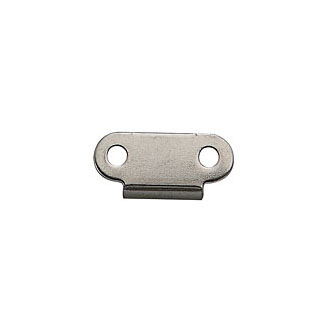 Twist Lock Latch Twist Lock Latch
Twist Lock Latch: A Secure Twist to Unveil Access
Introduction
In the realm of fastening mechanisms, the "Twist Lock Latch" emerges as a versatile solution that marries simplicity with security. With its user-friendly operation and wide-ranging applications, this latch has carved its niche in various industries. This article explores the fundamental design, practical applications, and potential future advancements of the Twist Lock Latch.
Twist Lock Latch for Cases, Cabinets and Access Panels
A twist lock latch uses a rotating action to engage a closure mechanism and retain a lid, door or panel. When selecting a product, distinguish mechanical engagement from access control: the word “lock” does not by itself confirm that a latch includes a key cylinder or padlock provision.
The right configuration depends on the installation, operating requirements and locking function you need.
Youn Shuay Industrial Co., Ltd. presents twist latches alongside draw latches, recessed latches and related case hardware. Review our twist latch product information or contact Youn Shuay to discuss a proposed model.
What Is a Twist Lock Latch?
“Twist lock latch” is a product term used for closures operated through rotation. Turning an actuator moves a retaining element into or out of engagement with a mating feature.
Depending on the design, the retaining element may be a cam, hook or another mechanism. Some products may incorporate an additional locking function, while others provide mechanical closure only.
Confirm the actual mechanism, operating movement and supplied components before purchasing. Similar product names do not establish equivalent features or installation dimensions.
Mechanical Closure and Key Locking Serve Different Purposes
Mechanical closure holds the mating components in position. Key locking restricts operation by requiring a corresponding key or another specified access method.
A latch may provide closure without access control. Conversely, a key-operated feature does not automatically establish a particular level of resistance to forced entry.
Describe the required function clearly. If a project requires documented security performance, identify the applicable criteria and request supporting information for the specific product.
Avoid treating “lock,” “locking” and “secure closure” as interchangeable specifications.
Confirm the Opening and Closing Sequence
Before selecting a twist lock latch, establish how users will operate it.
Check whether the actuator rotates directly or requires another movement before turning. Confirm the direction of operation and how the fully engaged position is identified.
If a key-operated model is proposed, ask how unlocking relates to opening the latch. Also confirm any key-removal conditions relevant to normal use.
Evaluate the complete sequence on a sample. An actuator that turns freely does not necessarily mean its retaining element has fully engaged the mating component.
Select a Compatible Mounting Arrangement
Provide a drawing showing the latch mounting surface and the corresponding frame, keeper or catch.
Review mounting hole positions, panel thickness, any required cutout, engagement depth and the offset between mating surfaces.
Check clearance behind the panel as well as around the front actuator. Internal shelves, folded edges or adjacent components may interfere with the retaining mechanism.
For cabinet installations, see our Cabinet Twist Latch page.
Define Locking and Key Requirements Before Ordering
Where key locking is required, confirm which options are available for the selected model.
For projects involving several latches, buyers may wish to ask whether the locks can use the same key or require different keys. Availability must be confirmed rather than assumed.
Also discuss the number of keys supplied, identification requirements and arrangements for replacement keys or cylinders where relevant.
Record the agreed locking configuration on the quotation and purchase order. A general description such as “locking version” may be insufficient to distinguish the required item.
Check Retention Under the Intended Conditions
Access control and resistance to unintended release are separate requirements.
For cases or panels exposed to handling or vibration, assess whether the retaining element stays engaged and whether the actuator moves toward release under the relevant conditions.
If secondary retention is required, identify the function and confirm its availability. Do not assume that every twist-operated mechanism includes a detent or safety catch.
For additional application considerations, visit our Industrial Twist Latch page.
Match Materials and Finishes to the Environment
Explain where the latch will be used and how it will be cleaned.
Indoor storage, humid locations, outdoor exposure and contact with cleaning chemicals can create different requirements. Request product-specific material and finish information.
The housing, actuator, retaining element and mating components may use different materials. Confirm the scope of any specification or supporting document.
If a locking cylinder is included, discuss its exposure conditions and product-specific maintenance instructions. Do not assume the external finish establishes the suitability of every internal component.
Consider Sealing Separately from Locking
A locked latch does not automatically create a water-resistant or dust-resistant enclosure.
For a gasketed assembly, check whether the mechanism provides the required closing action and whether contact is maintained around the enclosure perimeter.
For electrical enclosures, IEC 60529 — Degrees of Protection Provided by Enclosures ↗ provides the classification framework for IP protection.
A twist lock latch alone does not establish an enclosure’s IP rating. Any required protection should be verified for the complete configuration, including seals, joints, openings and mounting holes.
Compare Surface-Mounted and Recessed Formats
Surface-mounted hardware sits over the mounting surface. Recessed hardware places part of the assembly within a pocket or cutout.
The choice affects projection, installation depth and panel preparation. It does not independently establish locking performance, load capacity or environmental protection.
Explore our recessed latch range when evaluating an alternative mounting format.
For a pulling closure arrangement, compare our draw latch products.
Replacing an Existing Twist Lock Latch
Photograph the original hardware from the front and rear, both engaged and released.
Record the mounting pattern or cutout, panel thickness, retaining-element position and mating geometry. Include any identification associated with the locking configuration.
A replacement should be checked for operating compatibility as well as physical fit. Reusing an existing keeper or catch requires confirmation of its profile and engagement position.
If key compatibility matters, raise it at the start of the inquiry. Do not assume that visually similar locks use interchangeable keys.
Evaluate a Sample Before Volume Purchasing
Install the proposed sample on a representative assembly using the intended mating component and fastening arrangement.
Check complete engagement, full release, operating clearance and mounting stability. Where locking is included, evaluate the agreed locking and unlocking sequence.
Record the model, drawing revision, finish, locking configuration and supplied components. Identify any difference between the sample and the intended production item.
For samples, quantities and delivery discussions, visit our Twist Latch Supplier page.
Frequently Asked Questions About Twist Lock Latches
What is a twist lock latch?
It is a term used for a rotating closure mechanism. The actual retaining arrangement and any access-control features depend on the selected model.
Does every twist lock latch include a key?
No. Some products use “lock” to describe mechanical engagement. Confirm whether a key-operated function or padlock provision is included.
Is every twist lock latch a quarter-turn latch?
No. The operating angle and release sequence vary by mechanism. Review the product information and sample.
Can several latches use the same key?
Ask whether this option is available for the selected model. Confirm the agreed key arrangement, quantities and supplied keys before ordering.
Does a locking latch provide theft protection?
Any security claim requires product-specific evidence. A key-operated feature should not be assumed to provide a particular forced-entry resistance rating.
Can I reuse an existing keeper?
Only after confirming compatibility. Check its profile, mounting position and engagement with the proposed retaining element.
Is a twist lock latch waterproof?
Not automatically. Water protection depends on the complete enclosure and its verified performance.
Can a twist lock latch be used outdoors?
Suitability depends on the specific materials, finish, locking components and exposure conditions. Discuss these details before selection.
What should I measure for a replacement?
Provide the cutout or hole pattern, panel thickness, installation depth, mating offset and operating clearance. Include photographs and any relevant model identification.
How can I request a suitable product from Youn Shuay?
Send your drawing or photographs, required locking function, quantity and destination. Ask for confirmation of the proposed model, supplied parts and sample arrangements.
Twist Lock Latch Functions to Confirm
| Function | What it addresses | What to verify |
|---|---|---|
| Mechanical closure | Retains the lid, door or panel | Complete engagement and release |
| Key locking, where available | Restricts operation | Locking sequence and supplied keys |
| Padlock provision, where available | Allows a separate locking device | Compatible dimensions and clearance |
| Secondary retention, where available | Addresses unintended release | Mechanism and application suitability |
| Drawing or compression action | Pulls mating components together | Available travel and installed behavior |
| Enclosure sealing | Limits ingress as part of the assembly | Complete enclosure verification |
Installation Measurement Checklist
| Measurement | Details to provide | Selection purpose |
|---|---|---|
| Mounting footprint | Available length and width | Checks physical fit |
| Hole pattern or cutout | Dimensions and positions | Defines panel preparation |
| Panel thickness | Actual mounting thickness | Supports attachment review |
| Engagement depth | Position of the retaining contact | Establishes closure compatibility |
| Mating offset | Relationship between mounting surfaces | Checks engagement geometry |
| Rear clearance | Space behind the panel | Prevents internal interference |
| Front clearance | Space for operation and key access where relevant | Supports convenient use |
Locking Configuration Questions
| Topic | Question to discuss |
|---|---|
| Required function | Is access control needed, or mechanical closure only? |
| Model availability | Which locking options apply to the proposed latch? |
| Key arrangement | Can multiple locks share a key if required? |
| Supplied keys | How many keys are included? |
| Key removal | In which positions can the key be removed? |
| Replacement support | What replacement arrangements are available? |
| Documentation | How will the agreed configuration be identified on the order? |
Sample Approval Checklist
| Evaluation area | Check | Record |
|---|---|---|
| Installation | Fit on the intended panel | Drawing and photographs |
| Engagement | Full retaining-element contact | Observations |
| Release | Complete disengagement before opening | Evaluation notes |
| Access | Actuator and key clearance where applicable | Interference findings |
| Locking | Agreed locking and unlocking sequence | Configuration reference |
| Mounting | Stable panel and fastening arrangement | Inspection notes |
| Final approval | Correct finish and supplied parts | Approved model specification |
Contact Youn Shuay for Twist Lock Latch Selection
Selecting a twist lock latch begins with defining the closure, access-control and installation requirements separately.
Send Youn Shuay Industrial Co., Ltd. your drawing, application details and expected quantity to discuss a proposed product and sample evaluation.