Industrial Twist Latch
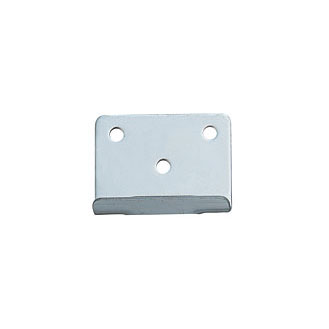 Industrial Twist LatchTitle: Exploring the Versatility of Industrial Twist Latches
Industrial Twist Latches: A Brief Introduction
In the realm of industrial hardware, the role of latches cannot be overstated. They serve as the unassuming yet indispensable components that hold machinery, equipment, and enclosures together, ensuring safety, security, and operational integrity. One such noteworthy contender in the world of latching mechanisms is the "Industrial Twist Latch." This article delves into the intricacies and applications of the Industrial Twist Latch, highlighting its key features, benefits, and diverse uses across industries.
Industrial Twist Latch Selection for Cases, Covers and Panels
An industrial twist latch uses a rotating action to engage or release a closure mechanism. Depending on its design, it can be considered for equipment cases, access covers and panels that require repeated opening and closing.
Selecting a suitable latch involves more than choosing an overall size. Mounting geometry, engagement, operating clearance and environmental exposure determine whether the proposed hardware fits the assembly.
Youn Shuay Industrial Co., Ltd. presents twist latches alongside draw latches, recessed latches and related case hardware. Send your drawing and operating requirements to discuss a proposed model and the information needed for evaluation.
Explore our twist latch product information or contact Youn Shuay.
How an Industrial Twist Latch Works
Turning the actuator moves a retaining element into or out of its engaged position. Depending on the mechanism, the retaining element may engage a separate keeper or another mating feature.
The operating movement varies between products. Not every twist latch provides quarter-turn operation, compression, adjustment or locking.
Before selecting a model, confirm its engagement sequence and the position that represents complete closure. Evaluate the actual mechanism rather than relying on the product name alone.
The term “industrial” describes an application context; it does not establish a universal load rating, service life or environmental classification.
Define the Closure Function First
Start by explaining what the latch must retain.
An equipment case may need to remain closed during handling. A service cover may require convenient access. A gasketed panel may need a defined closing action to bring the panel against its seal.
These requirements are different and should be described separately. Rotation alone does not establish that a latch provides controlled gasket compression or access security.
Also identify the consequences of unintended opening. Where additional retention or access control is required, specify the function and confirm whether the proposed model provides it.
Check Mounting Geometry and Engagement
Provide a drawing showing the latch position, mounting surfaces and mating component.
Review the mounting footprint, hole pattern, panel thickness and any required cutout. Include engagement depth and the offset between mating surfaces.
A latch may fit within the available space while still failing to engage correctly. Conversely, a compatible mechanism may require a different keeper position or installation depth.
For replacement hardware, measure the existing mating component as well as the latch. Matching hole spacing does not establish complete compatibility.
Allow Space for the Full Operating Movement
Check the space needed to rotate the actuator and release the closure.
Nearby handles, hinges, folded panel edges and adjacent equipment can interfere with operation. Evaluate both the open and closed positions, including access for the user’s hand.
If operators wear gloves, include them in the assessment. Consider whether the actuator remains accessible when the equipment is installed in its normal location.
Where projection is important, review our recessed latch range and confirm the cutout and depth requirements of any proposed alternative.
Evaluate Loads with the Complete Assembly
The latch, mating part, fasteners and mounting structure work together to retain the panel or cover.
Identify the direction and nature of the expected loads. Continuous separating forces, handling impacts and vibration may require different evaluation conditions.
Ask for the definition and basis of any stated load value. Working load, operating effort and ultimate failure load should not be treated as interchangeable.
Do not assume that several latches share a load equally. Mounting tolerances, panel stiffness and engagement differences can affect load distribution.
Assess Vibration and Resistance to Unintended Release
For equipment exposed to movement, assess the installed latch under the relevant conditions.
Check whether the actuator moves toward release, whether engagement changes and whether the mounting points remain stable.
If the application needs a detent, secondary catch or another retention feature, confirm its presence and function for the selected model. Do not assume that rotating operation alone prevents unintended opening.
A locking feature also needs separate review. Restricting access and resisting movement of the actuator are related considerations, but they are not automatically the same function.
For another closure mechanism, compare our draw latch products.
Match Material and Finish to the Environment
Describe the exposure conditions before choosing the material and finish.
Relevant information includes humidity, outdoor storage, cleaning chemicals, salt exposure and operating temperature. Specify any documentation or verification needed for your purchasing process.
Ask for product-specific material information. The actuator, housing, retaining element and mating parts may use different materials.
Appearance alone does not establish material grade or corrosion resistance. A finish sample can help evaluate visual compatibility, while environmental suitability requires separate consideration.
Consider Gaskets and Enclosure Protection
For a gasketed assembly, confirm whether the proposed mechanism provides the required closing action.
Review panel stiffness, frame alignment, gasket characteristics and latch positioning. Uneven contact around the perimeter cannot necessarily be corrected by increasing force at one location.
For electrical enclosures, IEC 60529 — Degrees of Protection Provided by Enclosures ↗ provides the classification framework for IP protection.
An industrial twist latch alone does not establish the finished enclosure’s IP rating. Any required protection should be verified for the complete configuration, including seals, joints, openings and mounting holes.
Plan for Repeated Access and Inspection
Repeated opening can reveal issues that are not apparent during an initial fit check.
Inspect for changes in operating effort, looseness, wear and incomplete engagement. Check the condition of mounting points and mating components as part of the equipment’s maintenance plan.
Follow product-specific maintenance instructions. Do not apply a general lubrication schedule or cleaning chemical without confirming compatibility.
If the latch is used on machinery access, evaluate it within the equipment’s overall safety design. A mechanical closure does not by itself provide a safety interlock.
Validate a Representative Sample
Before production purchasing, discuss sample availability and evaluate the proposed latch on a representative assembly.
Use the intended panel, mating component, fasteners and gasket where relevant. Confirm installation fit and normal operation before carrying out any application-specific assessment.
Agree on the evaluation conditions and acceptance criteria. Record the model, drawing revision, material, finish and supplied components.
For sample purchasing, quotations and delivery discussions, visit our Twist Latch Supplier page.
Frequently Asked Questions About Industrial Twist Latches
What is an industrial twist latch?
It is a rotating closure mechanism considered for an industrial application. Its actual mounting arrangement, retention features and performance depend on the specific model.
Is every twist latch a quarter-turn latch?
No. The required rotation varies by mechanism. Confirm the operating movement and engagement sequence for the proposed product.
Does an industrial twist latch include a lock?
Not necessarily. Specify whether you need key locking, a padlock provision or another access-control feature.
Are twist latches resistant to vibration?
Performance depends on the mechanism and installed assembly. Evaluate the proposed latch under relevant conditions and confirm any secondary retention requirement.
Can a twist latch compress a gasket?
Some mechanisms provide a drawing or compression action, while others primarily retain a panel. Confirm the function and evaluate it with the intended gasket and enclosure.
Does the latch determine an enclosure’s IP rating?
No. IP protection relates to the enclosure configuration. The latch is one component within the complete sealing and closure arrangement.
What dimensions are needed for product selection?
Provide the mounting footprint, hole pattern, panel thickness, cutout where applicable, engagement depth, mating-surface offset and operating clearance.
Can I replace an existing industrial twist latch?
Possibly, after checking the complete installation. Provide photographs and dimensions of both the latch and its mating component, then evaluate a proposed replacement.
What maintenance does a twist latch require?
Follow the instructions for the selected model. Inspect engagement, mounting stability and visible wear, and confirm compatible cleaning or lubrication methods where required.
Can Youn Shuay provide samples for evaluation?
Contact Youn Shuay to confirm sample availability, configuration, charges and delivery arrangements for the proposed model.
Industrial Twist Latch Application Checklist
| Application consideration | Information to provide | Selection purpose |
|---|---|---|
| Closure function | Case retention, cover fastening or panel closure | Defines the required action |
| Installation | Mounting surfaces, panel thickness and cutout | Establishes physical compatibility |
| Engagement | Mating position and required reach | Supports complete closure |
| Operator access | Hand clearance and glove use | Checks practical operation |
| Loading | Direction and relevant operating conditions | Defines evaluation needs |
| Vibration | Expected movement or handling conditions | Supports retention assessment |
| Environment | Moisture, chemicals and temperature | Guides material and finish review |
Features to Confirm for the Selected Model
| Feature | Question to ask |
|---|---|
| Operating angle | How far does the actuator rotate? |
| Engagement | What mating component is required? |
| Compression | Does the mechanism provide a drawing or compression action? |
| Locking | Is an access-control feature included? |
| Secondary retention | Is there a detent, catch or other retention arrangement? |
| Mounting format | Is installation surface-mounted or recessed? |
| Material and finish | What specifications apply to each relevant component? |
| Performance information | What ratings or evaluation data are available? |
Sample Evaluation Checklist
| Evaluation area | Representative check | Record |
|---|---|---|
| Installation fit | Compare the mounting arrangement with the drawing | Dimensions and photographs |
| Engagement | Confirm complete contact with the mating component | Observations |
| Rotation clearance | Operate through the full movement | Interference findings |
| Mounting stability | Inspect panel and fastener behavior | Inspection notes |
| Repeated operation | Check changes in effort or looseness | Conditions and results |
| Application exposure | Assess relevant movement or environmental conditions | Evaluation record |
| Approval | Confirm the accepted configuration | Model and specification revision |
Industrial Twist Latch Inquiry Information
| RFQ item | Details to include |
|---|---|
| Application | Equipment case, cover, panel or other assembly |
| Product reference | Existing model, drawing or photographs |
| Mounting details | Hole pattern, panel thickness and available depth |
| Required function | Retention, compression or locking needs |
| Operating conditions | Loading, vibration and opening frequency |
| Environment | Exposure conditions and temperature |
| Verification | Required documents or evaluation criteria |
| Quantity and delivery | Samples, order quantity and destination |
Contact Youn Shuay About Industrial Twist Latch Selection
A suitable industrial twist latch should be evaluated against the complete assembly and its operating conditions.
Send Youn Shuay Industrial Co., Ltd. your drawing, application details and expected quantity to discuss the proposed product and sample arrangements.