Cabinet hardware draw latches
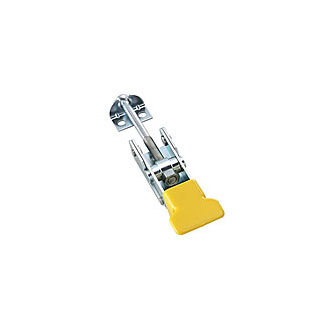 Cabinet hardware draw latches Cabinet hardware draw latches
Mastering Access: The Craftsmanship of Cabinet Hardware Draw Latches
Behind the closed doors of cabinets, a world of organization and storage resides. Yet, the key to unlocking this realm lies in the unassuming cabinet hardware draw latch. Crafted with precision by skilled artisans, these latches are not just functional components; they are the gatekeepers of convenience and aesthetics, shaping the very essence of accessible spaces.
Cabinet Hardware Draw Latches for Doors and Access Panels
Cabinet hardware draw latches pull a door or panel toward its mating frame to hold the assembly closed. They provide a manually operated closure option where users need accessible fastening and repeated opening.
Choosing a suitable latch starts with the cabinet construction. Door position, frame geometry, mounting strength and operating clearance determine whether the latch and keeper can engage correctly.
Youn Shuay Industrial Co., Ltd. manufactures drawbolt latches and related case hardware in Changhua, Taiwan. Explore our draw latch range or contact Youn Shuay to discuss a model for your cabinet application.
How Cabinet Draw Latches Work
A typical draw latch uses a movable hook or link that engages a separate keeper. Closing the lever draws the two mounting points together and retains the door or panel.
The keeper is installed on the mating component, with its position determined by the latch design. Depending on the cabinet layout, the latch body may be mounted on the door or frame.
Unlike a magnetic catch, a draw latch requires deliberate engagement and release. Unlike a hinge, it does not support the door through its opening movement. These components perform different functions and must work together within the cabinet assembly.
Not every draw latch includes a lock, adjustment mechanism or secondary catch. Confirm these features for the selected model.
Where Cabinet Hardware Draw Latches May Be Used
Draw latches can be considered for storage cabinets, workshop cupboards, portable cabinet assemblies and removable access panels where their installation geometry suits the design.
The application should guide product selection. A frequently opened storage door may prioritize convenient operation, while a movable cabinet may require evaluation under handling and vibration conditions.
For electrical cabinets or equipment access, identify additional enclosure and safety requirements before selecting closure hardware. General-purpose mechanical retention does not establish suitability for every cabinet application.
For projects involving more demanding operating conditions, review our industrial draw latch selection guidance.
Start with the Door and Frame Geometry
Cabinet doors may sit flush with the frame, overlap the opening or be recessed within it. These arrangements create different relationships between the latch body and keeper.
Provide a section drawing showing both mounting surfaces. Include the door-to-frame gap, surface offset and available mounting area.
Check whether a folded sheet-metal edge, trim strip or adjacent panel interferes with the link or lever. A latch that fits within the available footprint may still lack enough space to open fully.
Do not compensate for a geometry mismatch by forcing the lever closed. Confirm a compatible latch-and-keeper arrangement before drilling mounting holes.
Match Fasteners to the Cabinet Construction
The mounting arrangement should suit the door and frame material.
For sheet-metal cabinets, review panel thickness, access to the rear surface and any need for local reinforcement. For timber or composite panels, consider the fastening method, edge distance and resistance to repeated operating forces.
Fastener size and installation details should follow the product drawing and the cabinet design requirements. Avoid assuming that fasteners supplied for one construction are appropriate for another.
Where the mounting surface flexes during operation, investigate the panel and fastening arrangement before increasing latch tension.
Check Operating Clearance and User Access
Cabinet hardware draw latches should be positioned so users can engage and release them comfortably.
Evaluate clearance around the lever, including nearby handles, shelves, walls and adjacent doors. Check the complete opening movement rather than only the closed position.
If users wear gloves, assess operation with the intended gloves. Consider whether the open latch projects into a walkway or interferes with normal cabinet use.
Latch position should also suit the door’s opening sequence. On cabinets with two doors, establish which door closes first and where the keeper can be mounted securely.
Control Door Movement Without Excessive Tension
Correct engagement helps hold a cabinet door against its intended stop or contact surface. However, a latch should not be used to pull a badly misaligned door into position.
Inspect hinges, door alignment and frame condition before adjusting the closure. A sagging door or distorted frame can cause uneven engagement and increased operating effort.
Where adjustment is available, use it within the model’s specified range. Excessive tension may make the lever difficult to operate or place unnecessary stress on the mounting points.
If the door rattles when closed, check the complete assembly. Keeper position, hinge play, panel flexibility and worn components may all require attention.
Consider Gaskets and Enclosure Protection
Some cabinets use a gasket between the door and frame. In these assemblies, latch position and closing action affect how the gasket is compressed.
Evaluate contact around the full perimeter. One tightly closed point does not establish an even seal, particularly on a flexible or oversized door.
For electrical enclosures, IEC 60529 — Degrees of Protection Provided by Enclosures ↗ provides the classification framework for IP protection.
A latch alone does not establish an enclosure’s IP rating. Any required protection should be verified for the complete cabinet configuration, including the gasket, joints, openings and mounting holes.
Choose Material and Finish for the Installation Environment
Describe the conditions the cabinet will experience. Indoor dry storage, humid workshops, outdoor locations and frequent cleaning can create different material and finish requirements.
Request the specific material and surface-finish information for the proposed latch and keeper. Similar appearance does not establish equivalent corrosion performance.
For visible cabinet surfaces, also discuss finish appearance and acceptable variation. Evaluate a representative sample under the intended lighting and alongside the cabinet finish.
Confirm any required supporting documents before purchasing. Material, finish and test availability should be checked for the individual model.
Replacing Existing Cabinet Draw Latches
A replacement project should begin with measurements of the existing installation.
Record the latch footprint, mounting hole positions, closed height and keeper geometry. Include photographs showing the latch open, closed and engaged with the keeper.
Matching hole spacing is useful, but it does not establish complete compatibility. The replacement must also engage at the correct distance and clear nearby components during operation.
If the original keeper is worn or its compatibility is uncertain, discuss evaluating a complete latch-and-keeper assembly.
For purchasing details, visit our Draw Latch Suppliers page.
Evaluate a Sample on the Actual Cabinet
Before approving a production quantity, discuss sample availability and install the proposed hardware on a representative cabinet.
Check engagement, lever movement, door alignment and mounting stability. Open and close the door repeatedly to identify binding, interference or changes in operating effort.
Where the cabinet moves during use, evaluate the closure under relevant handling conditions. For gasketed cabinets, include the intended gasket in the assessment.
Record the approved model, keeper, finish and mounting arrangement so repeat orders can reference the same specification.
Frequently Asked Questions About Cabinet Hardware Draw Latches
What are cabinet hardware draw latches?
They are mechanical closures that pull a cabinet door or panel toward a mating frame. A typical assembly includes a lever-operated latch and a separate keeper.
Can a draw latch be installed on any cabinet door?
No. Suitability depends on the door and frame geometry, mounting strength, available space and operating conditions. Check the dimensional drawing and evaluate the proposed installation.
What is the difference between a draw latch and a cabinet lock?
A draw latch provides mechanical closure. A cabinet lock provides an access-control function. Some products combine these features, but a draw latch should not be assumed to include a lock.
Can draw latches be used on sheet-metal cabinets?
They may be suitable where the mounting arrangement and application requirements are met. Review panel thickness, fastener selection and any reinforcement needed.
Can draw latches be installed on wooden cabinets?
Potentially, provided the fastening arrangement and cabinet construction support the operating forces. Check panel material, edge distances and installation details before selection.
How do I measure for a replacement latch?
Measure mounting hole spacing, footprint, closed height, keeper dimensions and the offset between mounting surfaces. Provide photographs of the existing assembly in open and closed positions.
Will a draw latch stop a cabinet door from rattling?
Correct engagement may help control movement, but the cause should be checked first. Hinge play, door alignment, keeper position and panel flexibility can also contribute to rattling.
Are cabinet draw latches adjustable?
Some models offer adjustment, while others use fixed geometry. Confirm the adjustment method and permitted range for the selected product.
Does a draw latch make a cabinet waterproof?
No. Water protection depends on the complete cabinet construction and its verified performance. The latch is only one part of the closure arrangement.
How can I request a suitable model from Youn Shuay?
Send your cabinet drawing or photographs, mounting dimensions, quantity and operating environment. Identify any locking, finish or documentation requirements in the inquiry.
Cabinet Application and Selection Priorities
| Cabinet application | Main selection priority | What to check |
|---|---|---|
| General storage cabinet | Convenient daily operation | Lever access and correct engagement |
| Sheet-metal cabinet | Stable mounting | Panel thickness, fasteners and local stiffness |
| Timber or composite cabinet | Suitable fastening | Material strength and edge distance |
| Portable cabinet | Closure during movement | Retention under relevant handling conditions |
| Gasketed cabinet | Consistent closing contact | Gasket compression and frame alignment |
| Removable access panel | Practical removal and refitting | Clearance and mating-component position |
Dimensions to Confirm Before Installation
| Dimension or feature | Information required | Why it matters |
|---|---|---|
| Latch footprint | Overall mounting length and width | Confirms available mounting space |
| Hole pattern | Hole diameters and center distances | Supports installation or replacement |
| Mounting offset | Difference between mating surface levels | Determines engagement geometry |
| Door-to-frame gap | Gap in the closed position | Affects latch-and-keeper relationship |
| Closed height | Projection from the mounting surface | Helps check surrounding clearance |
| Lever travel | Space through the opening movement | Allows complete operation |
| Keeper profile | Shape and mounting position | Establishes mating compatibility |
Common Cabinet Closure Issues
| Observation | Items to investigate | Review direction |
|---|---|---|
| Lever is difficult to close | Keeper position, tension and door alignment | Check geometry before applying more force |
| Door moves when latched | Engagement, hinge play and panel stiffness | Identify the source of movement |
| Hook does not seat fully | Keeper compatibility and alignment | Compare with the product drawing |
| Mounting surface bends | Panel stiffness and fastening arrangement | Assess reinforcement or mounting changes |
| Latch hits nearby hardware | Lever travel and component placement | Review the full operating envelope |
| Gasket contact is uneven | Frame alignment, door stiffness and latch spacing | Evaluate the complete perimeter |
Cabinet Draw Latch Inquiry Checklist
| Inquiry item | Details to provide |
|---|---|
| Cabinet construction | Sheet metal, timber, composite or other material |
| Door arrangement | Flush, overlapping, recessed or removable |
| Technical reference | Drawing, dimensions and installation photographs |
| Existing hardware | Model reference and keeper details where available |
| Operating conditions | Indoor, outdoor, humid or frequently cleaned |
| Required features | Locking, adjustment or secondary retention |
| Appearance | Material and finish requirements |
| Purchasing needs | Sample quantity, order quantity and destination |
Contact Youn Shuay for Cabinet Hardware Selection
Selecting cabinet hardware draw latches begins with understanding the door, frame and operating requirements.
Send Youn Shuay Industrial Co., Ltd. your mounting dimensions, cabinet photographs and expected quantity to discuss a proposed model and sample arrangements.
You can also explore twist latches and recessed latches when considering alternative closure layouts.