Twist Latch producer
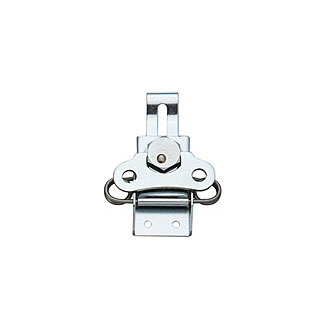 Twist Latch producer
Twist Latch Producer for Case and Box Hardware Projects
Choosing a twist latch producer starts with defining the product your assembly requires. Mounting dimensions, engagement geometry, material, finish and supplied components should be clearly identified before production purchasing.
Youn Shuay Industrial Co., Ltd. presents twist latches alongside draw latches, recessed latches and related case hardware. Buyers can submit drawings, photographs and purchasing requirements to discuss the proposed model and the details needed for evaluation.
Explore our twist latch product information or contact Youn Shuay to begin a project discussion.
Turn Application Requirements into a Production Specification
A production specification connects the intended application with a product that can be identified and checked.
Start with the case or panel construction. Record the mounting area, panel thickness, mating-surface relationship and space available for the operating movement.
Next, define the required function. A twist-operated closure may engage a retaining element without providing a lock or controlled compression. These features must be confirmed for the selected design.
Finally, identify the supplied components. Establish whether the purchasing unit includes only the latch or a matched assembly with its keeper, catch plate or other mating part.
A clear specification reduces the need to make assumptions during quotation, sample review and order confirmation.
Define Critical Dimensions with Your Twist Latch Producer
Not every dimension has the same effect on installation. Buyers should identify the features that determine whether the latch fits and operates correctly.
Typical review points include mounting hole positions, cutout dimensions, engagement depth, closed height and operating clearance. Where tolerances are important, show them on the drawing rather than relying on nominal measurements alone.
For replacement projects, include the existing mating component. A latch that fits the original holes may still engage at a different position.
Discuss which dimensions can be confirmed for the proposed model and how any special requirements would be evaluated.
Review Material and Finish Requirements
Specify material and finish according to the actual use conditions.
Describe humidity, outdoor exposure, cleaning methods and any contact with other materials. Ask for product-specific information rather than inferring material grade from appearance.
Different parts of the assembly may use different materials. Confirm the scope of the specification, including the housing, actuator, retaining element and mating component where applicable.
For visible hardware, define the appearance requirement as well. An identified finish sample can provide a clearer reference than a general description such as “silver” or “black.”
Any requested material declaration or supporting report should be discussed before order approval.
Clarify Production Responsibilities
When evaluating a twist latch producer, ask which activities are handled directly and which involve external suppliers, where that distinction matters to your qualification process.
Do not assume that every component, coating or secondary operation is completed at one location. The important purchasing question is how the final agreed product will be supplied and reviewed.
If your project includes a modification, confirm who is responsible for the drawing, tooling and sample approval. Discuss any tooling ownership, maintenance or replacement arrangements that apply.
These details should be agreed for the specific project rather than inferred from a general company introduction.
Use Sample Approval to Establish a Reference
A sample helps connect the proposed specification with the actual installation.
Confirm the sample model, material, finish and included parts. Identify any differences between the sample and the intended production item.
Install it on a representative case or panel. Check engagement, full operating movement, mounting stability and user access. If the assembly includes a gasket, evaluate the sample with that gasket installed.
Record the results and any required changes. Approval should identify the final configuration rather than simply state that a sample was received.
For broader selection guidance, visit our Twist Latch Manufacturer page.
Agree on Inspection and Acceptance Requirements
Inspection requirements should focus on characteristics that affect the product’s intended use.
These may include mounting dimensions, complete engagement, operating movement, finish condition and correct component quantities. If inspection records or special checks are required, discuss their availability and cost before purchasing.
The ISO 9000 family of quality management standards ↗ provides an authoritative reference for learning about quality management systems and principles.
Any certification requirement should be verified separately for the relevant company and scope. Product acceptance should remain tied to the agreed drawing, specification and evaluation criteria.
Evaluate Function Under Relevant Conditions
A latch should be assessed as part of the installed assembly.
For frequently opened cases, review changes in operating effort, looseness or engagement during repeated use. For products exposed to movement, identify the handling or vibration conditions relevant to the application.
Where load or durability information is required, ask what data is available and how it was established. Confirm the test setup, mounting arrangement and acceptance criteria before comparing results.
A product description alone should not be treated as evidence of a particular load capacity or service life.
Maintain Specification Clarity Across Production Orders
Repeat purchasing depends on keeping the approved product reference clear.
Include the model number, drawing revision, material, finish and supplied components on the purchase order. Where an approved sample is used, identify it so both parties can connect it with the written specification.
Discuss how proposed changes will be communicated. A change to a mating component, finish or dimension may require another review even if the model name remains the same.
If an alternative product is proposed, evaluate its installation and function before accepting substitution.
Plan Packaging and Delivery Before Order Release
Production planning should include how the hardware will be packed and identified.
Confirm pack quantities, separation of mating components and protection of visible finishes. For mixed-model orders, request clear item separation and agreed labeling.
Distinguish production timing from transit time. Ask when the quoted lead time begins and whether drawing confirmation, payment or sample approval must be completed first.
For quotation, packaging and supply considerations, visit our Twist Latch Supplier page.
Discuss Standard Models and Proposed Changes
Begin by checking whether a listed model meets your needs. If a modification is necessary, mark the requested change on a drawing.
Identify the functional reason for the change, such as installation clearance, mounting compatibility or a different mating arrangement. This provides a better basis for discussion than requesting a change in size alone.
Feasibility, tooling, quantities and development timing must be confirmed individually. A proposed modification should not be treated as approved until the relevant details are agreed.
You can also compare draw latches and recessed latches when considering another closure arrangement.
Frequently Asked Questions About Twist Latch Producers
What is a twist latch producer?
A twist latch producer makes closure hardware operated through a rotating action. The mechanism, mounting arrangement and supplied components depend on the specific design.
What is the difference between a producer and a manufacturer?
The terms often overlap. Buyers should ask about the company’s actual responsibilities for the proposed product, including production, assembly and any externally supplied operations relevant to the project.
What should I prepare before discussing production?
Provide a model reference or drawing, application details, mounting dimensions, material and finish requirements, quantities and delivery destination. Identify any special documentation or evaluation requirements.
Can I order according to an existing sample?
An existing sample is a useful starting point, but it should be supported by measurements and an agreed specification. Confirm which characteristics must be matched and whether changes are acceptable.
Can a twist latch producer modify a standard model?
Possibly, depending on the product and requested change. Submit a marked drawing and ask about feasibility, tooling, minimum quantities and sample approval.
How should sample approval be recorded?
Record the model, drawing revision, material, finish and included components. Identify evaluation results, agreed changes and the final approved configuration.
Does every twist latch provide compression or locking?
No. Rotating operation does not automatically establish compression, quarter-turn movement or access control. Confirm each required feature for the selected model.
Can I request inspection documents?
State the documents and checks required before order confirmation. Availability, cost and applicability should be confirmed for the proposed product.
How can repeat-order consistency be supported?
Use an agreed product specification and revision reference. Include these details on each order and discuss how proposed changes or substitutions will be reviewed.
How do I contact Youn Shuay about production requirements?
Send your drawing, photographs or product reference together with quantities and application details through the contact page.
Production Specification Checklist
| Specification area | Details to define | Purpose |
|---|---|---|
| Product identity | Model and configuration | Identifies the item to be supplied |
| Mounting dimensions | Hole pattern, cutout and panel relationship | Establishes installation fit |
| Engagement geometry | Mating position and retaining-element reach | Supports correct closure |
| Operating movement | Rotation and surrounding clearance | Helps prevent interference |
| Material | Requirements for relevant components | Defines material expectations |
| Finish | Surface treatment and appearance reference | Clarifies environmental and visual requirements |
| Supply scope | Latch, mating parts and accessories | Defines the purchasing unit |
Sample Approval Checklist
| Review stage | What to check | Record to retain |
|---|---|---|
| Sample identification | Model and configuration | Sample reference |
| Drawing comparison | Critical dimensions and mating geometry | Agreed drawing revision |
| Installation | Fit on a representative assembly | Photographs and observations |
| Operation | Engagement, movement and access | Evaluation notes |
| Appearance | Finish against the agreed reference | Identified finish sample where applicable |
| Required changes | Differences from the intended production item | Written change confirmation |
| Final approval | Accepted product configuration | Approved specification |
Inspection Requirements to Discuss
| Inspection area | Review focus | Requirement to agree |
|---|---|---|
| Dimensions | Features affecting installation | Dimensions, tolerances and checking method |
| Assembly | Correct parts and engagement | Configuration and functional checks |
| Operation | Opening and closing behavior | Relevant evaluation conditions |
| Finish | Appearance and surface condition | Reference and acceptance criteria |
| Supplied components | Correct quantities and mating parts | Packing and component list |
| Documentation | Required records or reports | Scope, format and availability |
Repeat Production and Change Review
| Item | Buyer action | Detail to confirm |
|---|---|---|
| Repeat order | Reference the approved model and revision | Current specification |
| Quantity planning | Separate forecasts from confirmed orders | Accepted purchase quantity |
| Product change | Identify effects on installation and function | Review and approval arrangements |
| Alternative model | Compare dimensions and mechanism | Acceptance before substitution |
| Packaging | State pack and labeling requirements | Agreed delivery configuration |
| Delivery schedule | Provide the required receipt date | Production and dispatch timing |
Contact Youn Shuay About Twist Latch Production Requirements
A clear production inquiry connects your application with measurable product requirements.
Send Youn Shuay Industrial Co., Ltd. your drawing, model reference, sample requirements and expected quantities to discuss the proposed hardware and the information needed for approval.