Twist Latch manufacturer
Twist Latch manufacturer
Twist Latch supplier
Twist Latch distributor
Twist Latch company
Twist Latch producer
Industrial Twist Latch
Hardware Twist Latch
Cabinet Twist Latch
Twist Lock Latch
Heavy Duty Twist Latch
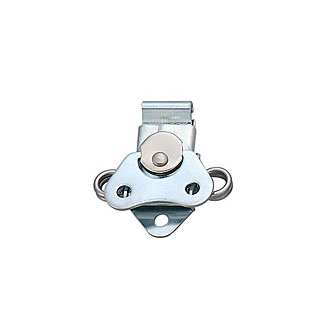 Twist Latch manufacturerTitle: Youn Shuay Industrial Co., Ltd.: Your Trusted Twist Latch Manufacturer
Introduction:
In the world of hardware and industrial components, finding a reliable and reputable manufacturer is crucial. When it comes to Twist Latches, Youn Shuay Industrial Co., Ltd. stands out as a prominent and trusted manufacturer, known for its commitment to quality, innovation, and customer satisfaction.
Company Overview:
Youn Shuay Industrial Co., Ltd. has established itself as a leading player in the manufacturing of Twist Latches. With years of experience and expertise in the industry, the company has earned a strong reputation for producing high-quality latch solutions that cater to diverse industrial needs.
Twist Latch Manufacturer for Case and Box Hardware
Choosing a twist latch manufacturer starts with understanding how the proposed closure fits your case or box. The operating mechanism, mounting dimensions, mating components and available clearance should all be reviewed before purchasing.
Youn Shuay Industrial Co., Ltd., established in 1984 in Changhua, Taiwan, manufactures drawbolt latches and luggage hardware. Its product range includes twist latches for buyers evaluating case closure options.
Send your drawing, product reference and application details to discuss the proposed model, sample availability and purchasing requirements.
Learn more about Youn Shuay’s company background or contact us about twist latches.
What Is a Twist Latch?
A twist latch uses a rotating operating action to engage or release a closure mechanism. Depending on the design, turning the actuator moves a cam, hook or other retaining element into its mating position.
The term covers different mechanisms. Buyers should confirm how a particular model engages, whether it provides any draw-down action and which mating parts it requires.
A twist latch should not automatically be treated as a quarter-turn latch, a compression latch or a key-operated lock. These descriptions refer to particular features that need to be checked for the selected product.
How to Evaluate a Twist Latch Manufacturer
A useful manufacturer evaluation connects the proposed product with information that can be verified.
Start with the relevant product range and ask for a model reference. Review the dimensional drawing, supplied components, material and finish information, and any applicable operating instructions.
For ongoing purchasing, establish how the approved product will be identified on quotations and orders. If your project requires additional documentation or testing, raise those requirements before sample approval.
Manufacturing experience provides useful background, while suitability for your project depends on the specific model and installed assembly.
Match the Latch Mechanism to the Application
Explain how users will open and close the case. Consider access frequency, operation with gloves, nearby hardware and the space available for rotation.
For carrying cases, projection and handling clearance may be important. For equipment cases or removable panels, keeper engagement and the mounting arrangement may require closer review.
If the closure must pull a lid against a gasket, confirm that the proposed mechanism provides the required action. Rotation alone does not establish controlled compression.
Describe the function you need rather than selecting only by appearance.
Confirm Mounting Dimensions and Mating Geometry
Provide a drawing showing the latch mounting surface and its relationship to the lid, frame or mating panel.
Important details include mounting hole positions, panel thickness, any required cutout, engagement depth and the offset between mating surfaces.
Check the complete operating movement. An actuator may fit within the closed footprint but interfere with an adjacent handle, panel edge or wall when rotated.
For replacement projects, include photographs of the existing latch in both positions and measurements of the mating component. Matching hole spacing alone does not establish compatibility.
Surface-Mounted and Recessed Installation Options
Surface-mounted hardware attaches over the mounting surface, while recessed hardware places part of the assembly within a pocket or cutout.
Surface mounting may simplify some installations, but projection still needs to be considered. Recessed installation requires adequate depth, suitable panel construction and an accurately defined opening.
“Recessed” describes the installation arrangement rather than one particular operating mechanism. A recessed assembly can incorporate a twist-operated closure.
Explore our recessed latch range when comparing installation formats.
Discuss Materials and Surface Finishes
Material and finish requirements should reflect the operating environment and appearance expectations.
Provide details of indoor or outdoor exposure, humidity, cleaning chemicals and contact with other metals. Ask for the actual material designation and finish of the proposed model.
The actuator, housing, retaining element and mating components may use different materials. Confirm which parts are covered by the specification.
If finish appearance matters, evaluate a representative sample alongside the case material. Agree on an appropriate reference rather than relying entirely on screen images.
Define Retention and Access-Control Requirements
Mechanical closure, locking and resistance to unintended opening are different requirements.
A twist latch may hold a lid closed without restricting who can open it. If access control is needed, specify whether you require a key lock, padlock provision or another arrangement.
For applications involving movement or vibration, describe the conditions and discuss the relevant retention features. Do not assume that every twist latch includes a detent or secondary catch.
Any load or performance value should be reviewed with its definition, test conditions and mounting arrangement.
Review Quality Requirements with the Manufacturer
Before purchasing, define the characteristics that matter to your assembly. These may include critical dimensions, complete engagement, operating effort, finish appearance and the components supplied with each unit.
Discuss the available inspection information and how a reported discrepancy would be reviewed.
The ISO 9000 family of quality management standards ↗ provides an authoritative introduction to quality management, including customer focus, process management and continual improvement.
This reference is for general guidance. Any manufacturer certification should be verified separately, and product approval should remain tied to the agreed specification.
Evaluate Samples Before Production Purchasing
Discuss sample availability and confirm which model, material and finish the sample represents.
Install it on a representative case or panel using the intended mating component and fastening arrangement. Check engagement, rotation clearance, opening and closing effort, and mounting stability.
Repeat the operation under conditions relevant to the project. Where additional performance verification is required, agree on the procedure and acceptance criteria.
Record the approved model, drawing revision, finish and supplied components. These references provide a clearer basis for the production order.
Discuss Standard Products and Proposed Modifications
Start by checking whether an existing model meets your requirements. If a change is needed, identify it on a drawing.
Potential discussion points include mounting dimensions, mating geometry, finish or operating features. Feasibility must be confirmed individually.
Ask whether a proposed change requires tooling, a revised minimum quantity or additional sample evaluation. Include development timing in the project schedule before committing to a production date.
For other closure mechanisms, compare our draw latch products with the proposed twist latch arrangement.
Frequently Asked Questions About Twist Latch Manufacturers
What does a twist latch manufacturer produce?
A twist latch manufacturer produces closure hardware operated through a rotating action. The mechanism and mounting arrangement vary by model, so buyers should review the actual product drawing.
Is every twist latch a quarter-turn latch?
No. The required rotation and engagement mechanism depend on the design. Confirm the operating movement for the selected model.
What is the difference between a twist latch and a draw latch?
A twist latch is described by its rotating operating action. A draw latch is described by its action of pulling mating components together. Some designs combine these characteristics, so compare the actual mechanism.
Does a twist latch include a lock?
Not necessarily. Specify your access-control requirements and confirm whether the proposed model includes a locking feature.
What dimensions should I provide?
Include mounting hole positions, panel thickness, cutout dimensions where relevant, mating-surface offset and available operating clearance. For replacements, include the existing mating component.
Can I request a recessed twist latch?
Send your required installation depth and cutout drawing. Contact Youn Shuay to discuss whether a suitable listed product is available.
Can twist latches be used outdoors?
Suitability depends on the specific material, finish, mechanism and exposure conditions. Describe the environment and request relevant product information before selection.
Can I request a custom twist latch?
Submit a drawing showing the required changes. Modification feasibility, tooling, quantities and development timing must be confirmed for the project.
Are samples available before a bulk order?
Contact Youn Shuay to confirm availability, charges and delivery arrangements. Evaluate the sample on a representative assembly before approving the production specification.
What should I include in a quotation request?
Provide the model reference or drawing, intended use, quantity, material and finish requirements, supplied-component needs and delivery destination. Identify any required documentation or evaluation conditions.
Twist Latch Manufacturer Selection Checklist
| Evaluation area | Information to confirm | Purpose |
|---|---|---|
| Product reference | Model number and dimensional drawing | Identifies the proposed hardware |
| Mechanism | Rotation, engagement and release action | Checks functional suitability |
| Installation | Surface mounting or recessed arrangement | Defines assembly requirements |
| Mating components | Keeper, cam or other engagement parts | Clarifies compatibility and supply scope |
| Material and finish | Product-specific information | Supports environmental and appearance review |
| Samples | Specification, availability and charges | Enables installation evaluation |
| Production reference | Approved model and drawing revision | Supports repeat purchasing |
Installation Dimensions to Review
| Item | What to measure | Why it matters |
|---|---|---|
| Mounting footprint | Overall length and width | Checks available space |
| Hole pattern | Hole diameter and center distances | Defines fastening positions |
| Panel thickness | Actual mounting thickness | Affects attachment and fit |
| Cutout | Opening dimensions where required | Supports recessed installation |
| Engagement geometry | Reach, offset and mating position | Establishes correct closure |
| Projection | Height above the mounting surface | Helps assess handling clearance |
| Rotation clearance | Space through the full operating movement | Prevents interference |
Sample Evaluation Checklist
| Evaluation | Check | Record |
|---|---|---|
| Mounting fit | Alignment with the intended panel | Drawing and installation photographs |
| Engagement | Full contact with the mating component | Observations and measurements |
| Operation | Opening and closing movement | Effort and interference findings |
| Stability | Fasteners and panel behavior | Inspection notes |
| Repeated use | Changes in movement or engagement | Evaluation conditions and results |
| Appearance | Finish against the agreed reference | Sample identification |
| Approval | Conformity with project requirements | Approved specification |
Twist Latch RFQ Information
| RFQ item | Details to provide |
|---|---|
| Application | Carrying case, box, panel or other assembly |
| Reference | Existing model, drawing or photographs |
| Installation | Panel thickness, mounting pattern and available depth |
| Operating needs | Access frequency, clearance and glove use |
| Required features | Locking, draw-down action or retention requirements |
| Environment | Humidity, outdoor exposure or cleaning conditions |
| Quantity | Samples, initial order and expected repeat demand |
| Delivery | Destination and required timing |
Contact Youn Shuay About Twist Latch Manufacturing
If you are looking for a twist latch manufacturer, begin with the installation and operating requirements of your case or box.
Send Youn Shuay Industrial Co., Ltd. your drawing, product reference and expected quantity to discuss model selection and purchasing details.