Industrial draw latch manufacturers
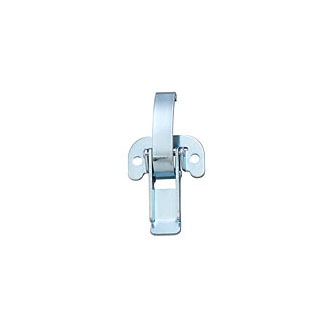 Industrial draw latch manufacturers Industrial Draw Latch Manufacturers: A Spotlight on Youn Shuay Industrial Co., Ltd.
In the realm of industrial hardware, precision and reliability are paramount. When it comes to securing cabinets, enclosures, and doors, draw latches play a crucial role. One distinguished name that stands out in the landscape of industrial draw latch manufacturers is Youn Shuay Industrial Co., Ltd.
Youn Shuay Industrial Co., Ltd. has established itself as a prominent player in the field, renowned for its commitment to quality, innovation, and customer satisfaction. With a legacy spanning several decades, the company has consistently delivered top-tier industrial draw latch solutions, catering to a wide array of industries and applications.
Industrial Draw Latch Manufacturers: Selecting Hardware for Your Application
Comparing industrial draw latch manufacturers requires a clear understanding of how the latch will be installed and used. Mounting geometry, separating loads, vibration, environmental exposure and opening frequency can all influence product selection.
A suitable latch must work with the complete assembly, including the keeper, panel, hinges and fasteners. Product size or appearance alone cannot establish whether it meets an industrial application’s requirements.
Youn Shuay Industrial Co., Ltd., established in 1984 in Changhua, Taiwan, manufactures drawbolt latches and luggage hardware. Buyers considering its products for industrial cases, boxes or covers can submit application details to discuss model suitability and the information available for evaluation.
Explore our draw latch products or contact Youn Shuay with your drawing and operating requirements.
What Makes Industrial Draw Latch Selection Different?
Industrial applications may expose closure hardware to conditions beyond ordinary carrying and storage. A cover might be opened repeatedly during maintenance, a transport case may experience handling shocks, or a gasketed lid may require controlled compression.
These conditions should be described before a model is selected. The term “industrial” does not establish a universal load rating, corrosion classification or vibration resistance.
When evaluating industrial draw latch manufacturers, ask how the proposed model relates to your installation and what supporting information is available. Any application-specific performance requirement should be confirmed rather than inferred from a general product description.
Define the Latch’s Function in the Assembly
Start by identifying what the latch must do. It may retain a removable cover, pull a hinged lid against a gasket or keep a case closed during handling.
Next, describe the forces that could separate the mating components. Include their direction and whether they occur continuously, intermittently or during an impact.
The latch should also be evaluated alongside the structure supporting it. A strong latch mounted on a flexible panel or an unsuitable fastening arrangement may not provide the intended result.
Where several latches are installed, do not assume they share loads equally. Panel stiffness, mounting tolerances and latch adjustment can affect the distribution of force.
Check Mounting Geometry Before Finalizing a Model
A draw latch typically engages a mating keeper and pulls the two mounting surfaces together during closing. Correct engagement depends on the relative position of these components.
Provide a drawing showing the mounting surfaces, hole pattern, joint gap and any offset between the lid and body. Check the space needed for the lever to open and for the hook or link to disengage.
For replacement hardware, include the existing keeper dimensions. Matching mounting holes does not necessarily mean the replacement has the same engagement geometry.
Review our Draw Latches selection page for general product considerations.
Distinguish Closing Force from Holding Capacity
Different force values describe different aspects of latch performance.
Closing force may describe the effort needed to operate the mechanism or the force generated as the assembly closes, depending on the terminology used. Holding capacity describes resistance to an applied load under specified conditions. Ultimate failure load concerns the point at which a tested specimen fails.
Ask the manufacturer to define any stated value and explain the test arrangement. Confirm the loading direction, mounting method and applicable limitations.
Avoid selecting a latch using only the weight of the case contents. The actual forces acting on the closure depend on the assembly and its operating conditions.
Evaluate Vibration and Unintended Opening
For equipment or cases exposed to vibration, assess the latch in its installed configuration.
Relevant questions include whether tension changes during operation, whether the keeper remains fully engaged and whether the lever can move toward the open position under the expected conditions.
Some applications may require a secondary catch or another retention feature. Confirm availability for the proposed model rather than assuming that every draw latch includes one.
A key lock, padlock provision and secondary retention catch serve different purposes. Specify the required function clearly when discussing the application.
Match Material and Finish to the Environment
Describe the exposure conditions in practical terms. Include humidity, outdoor storage, cleaning chemicals, salt exposure and operating temperature where relevant.
Ask for product-specific material and finish information. The body, keeper, link, pins and springs may not all use the same material.
Where corrosion testing is required, agree on the test method, duration, specimen and acceptance criteria. The ASTM B117 salt-spray testing reference ↗ provides information about a controlled corrosion test environment. Test hours alone should not be treated as a guaranteed outdoor service life.
The required material or finish should be confirmed for the selected model before sample approval or purchasing.
Consider Gasket Compression and Enclosure Protection
For a gasketed cover, the latch forms part of a larger sealing arrangement. Gasket characteristics, frame alignment, panel stiffness and latch spacing all affect closure.
Excessive tension can make operation difficult or distort the mounting structure. Insufficient tension may leave uneven contact around the gasket.
For electrical enclosures, IEC 60529 — Degrees of Protection Provided by Enclosures ↗ provides the classification framework for IP protection.
A latch alone does not establish the finished enclosure’s IP rating. Any required rating should be verified for the complete assembly, including its joints, openings and installed hardware.
Assess Repeated Operation and Maintenance Access
Frequent access creates additional selection considerations. Operators need enough space to grip the lever, engage the keeper and open the cover without interference.
If gloves are used, evaluate the latch under that condition. Also check whether adjacent handles, hinges or panel edges obstruct movement.
Agree on an evaluation that reflects the expected opening frequency. Look for changes in operating effort, engagement, looseness or visible wear.
For machinery access, closure hardware must be considered within the equipment’s overall safety design. A mechanical latch does not automatically provide a safety interlock or verify that hazardous motion has stopped.
Validate a Representative Sample
Sample evaluation should reproduce the intended installation as closely as practical.
Use the proposed panel construction, keeper position, fasteners and gasket where applicable. Check normal operation first, then assess the relevant loads and environmental conditions using agreed procedures.
Document the model, drawing revision, material, finish and included components. Record the acceptance criteria and evaluation results so the approved sample can be connected to the production order.
For a broader review of manufacturing and purchasing requirements, visit our Draw Latches Manufacturers page.
Discuss Industrial Application Requirements with Youn Shuay
A useful inquiry explains the application before requesting a recommendation.
Send your assembly drawing, mounting dimensions, operating conditions and expected quantity. Identify any required load information, corrosion testing, cycle evaluation or supporting documentation.
Youn Shuay can be contacted to discuss its listed products and the details available for the proposed model. Special features, modifications and test requirements should be confirmed individually.
If another closure arrangement is being considered, explore our twist latch range and recessed latch range.
Frequently Asked Questions About Industrial Draw Latch Manufacturers
How should I compare industrial draw latch manufacturers?
Compare the proposed products against the same application requirements. Review mounting geometry, material and finish information, defined performance data, sample arrangements and the documentation available for the selected model.
Does an industrial draw latch always have a high load rating?
No. “Industrial” is not a universal load classification. Ask for a product-specific rating, its definition and the conditions under which it was established.
Can Youn Shuay products be considered for industrial applications?
Buyers can submit their application details to discuss the listed products. Suitability should be established for the particular model and installation through specification review and appropriate evaluation.
Are draw latches resistant to vibration?
Performance depends on the latch design and installation. Evaluate the proposed assembly under the relevant conditions and discuss whether secondary retention is needed.
What dimensions should I provide?
Include the mounting footprint, hole spacing, panel thickness, mating-surface offset, joint gap and keeper position. Also show the space available for opening the lever and disengaging the link or hook.
Can a draw latch compress a gasket?
A suitable draw latch arrangement can pull mating components against a gasket. The required compression, panel stiffness, latch spacing and operating effort must be evaluated together.
Does the latch determine an enclosure’s IP rating?
No. An IP rating concerns the enclosure configuration. The gasket, joints, openings, mounting holes and closure hardware all contribute to the finished assembly’s performance.
Should I specify a lock or a safety catch?
Specify the function you need. A lock addresses access control, while a secondary retention feature may address unintended release. Confirm the actual features of the selected model.
Can I request a customized industrial latch?
Submit a drawing describing the required changes. Feasibility, tooling, minimum quantities and evaluation requirements must be discussed before assuming a modification is available.
What should be approved before a production order?
Confirm the model, drawing revision, material, finish, keeper, supplied components and agreed acceptance criteria. Complete any required sample evaluation before approving the production specification.
Industrial Application Requirements Checklist
| Requirement | Information to provide | Selection purpose |
|---|---|---|
| Closure function | Cover retention, case closure or gasket compression | Defines the latch’s role |
| Mounting geometry | Drawing, offsets and keeper position | Establishes engagement compatibility |
| Loading | Direction, magnitude and loading conditions where known | Supports performance assessment |
| Vibration and shock | Relevant operating or transport conditions | Defines retention evaluation needs |
| Environment | Humidity, chemicals, salt exposure and temperature | Guides material and finish review |
| Opening frequency | Expected use and access requirements | Supports operation and wear evaluation |
| Special features | Locking, adjustment or secondary retention | Clarifies model requirements |
Performance Terms to Clarify
| Term | What buyers should establish |
|---|---|
| Operating effort | How and where the user-applied force is measured |
| Clamping force | The force drawing the mating components together |
| Working or holding load | Meaning, loading direction and applicable conditions |
| Ultimate failure load | Test setup and observed failure mode |
| Cycle performance | Test conditions and acceptance criteria |
| Corrosion result | Method, duration, specimen and evaluation criteria |
| Ingress protection | Finished enclosure configuration and supporting verification |
Sample Evaluation Plan
| Evaluation area | Representative check | Record |
|---|---|---|
| Installation | Fit on the intended panel and keeper arrangement | Drawing and installation photographs |
| Engagement | Full hook or link contact through normal operation | Observations and dimensional checks |
| Operating clearance | Access with nearby components and gloves where relevant | Clearance review |
| Mounting stability | Panel and fastening behavior under agreed conditions | Inspection findings |
| Repeated operation | Changes in effort, engagement or looseness | Cycle conditions and results |
| Environmental exposure | Performance under specified exposure where required | Applicable evaluation report |
| Final approval | Conformity with agreed requirements | Approved model and specification |
Industrial Draw Latch RFQ Information
| RFQ item | Details to include |
|---|---|
| Application | Equipment case, cover, box or other assembly |
| Product reference | Existing model, drawing or photographs |
| Installation | Panel construction, hole pattern and keeper details |
| Performance needs | Loading, vibration and opening frequency |
| Environment | Exposure conditions and operating temperature |
| Required evidence | Drawings, material information or specific test documentation |
| Quantity | Samples, initial order and expected repeat demand |
| Delivery | Destination and target schedule |
Contact Youn Shuay for Product Evaluation
When comparing industrial draw latch manufacturers, begin with a specification that reflects the complete assembly and its operating conditions.
Send Youn Shuay Industrial Co., Ltd. your drawing, application details and purchasing requirements to discuss the proposed product and the information needed for evaluation.
Contact Youn Shuay about your industrial draw latch requirements.